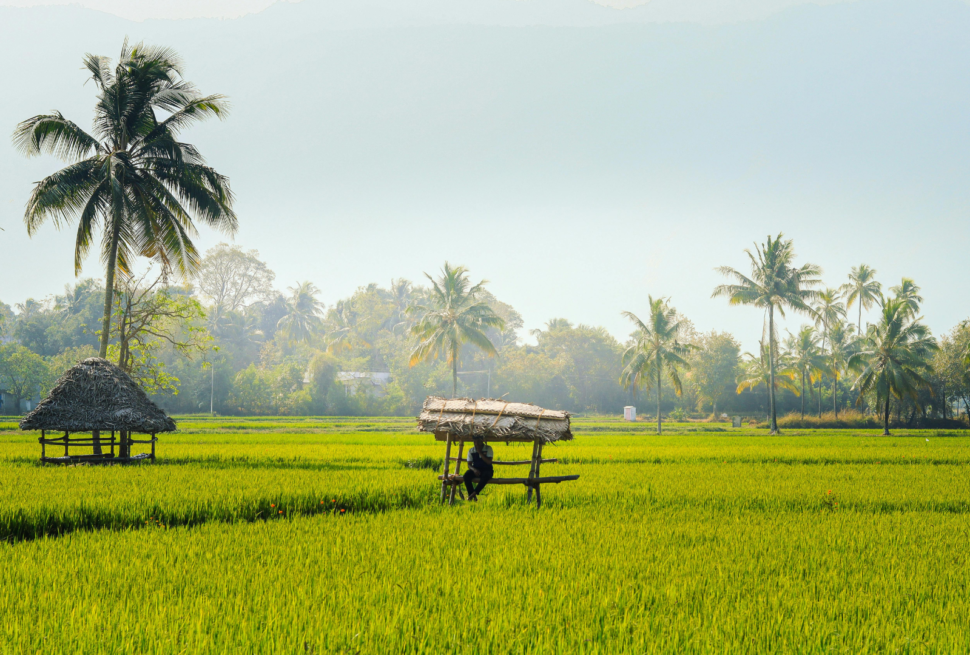


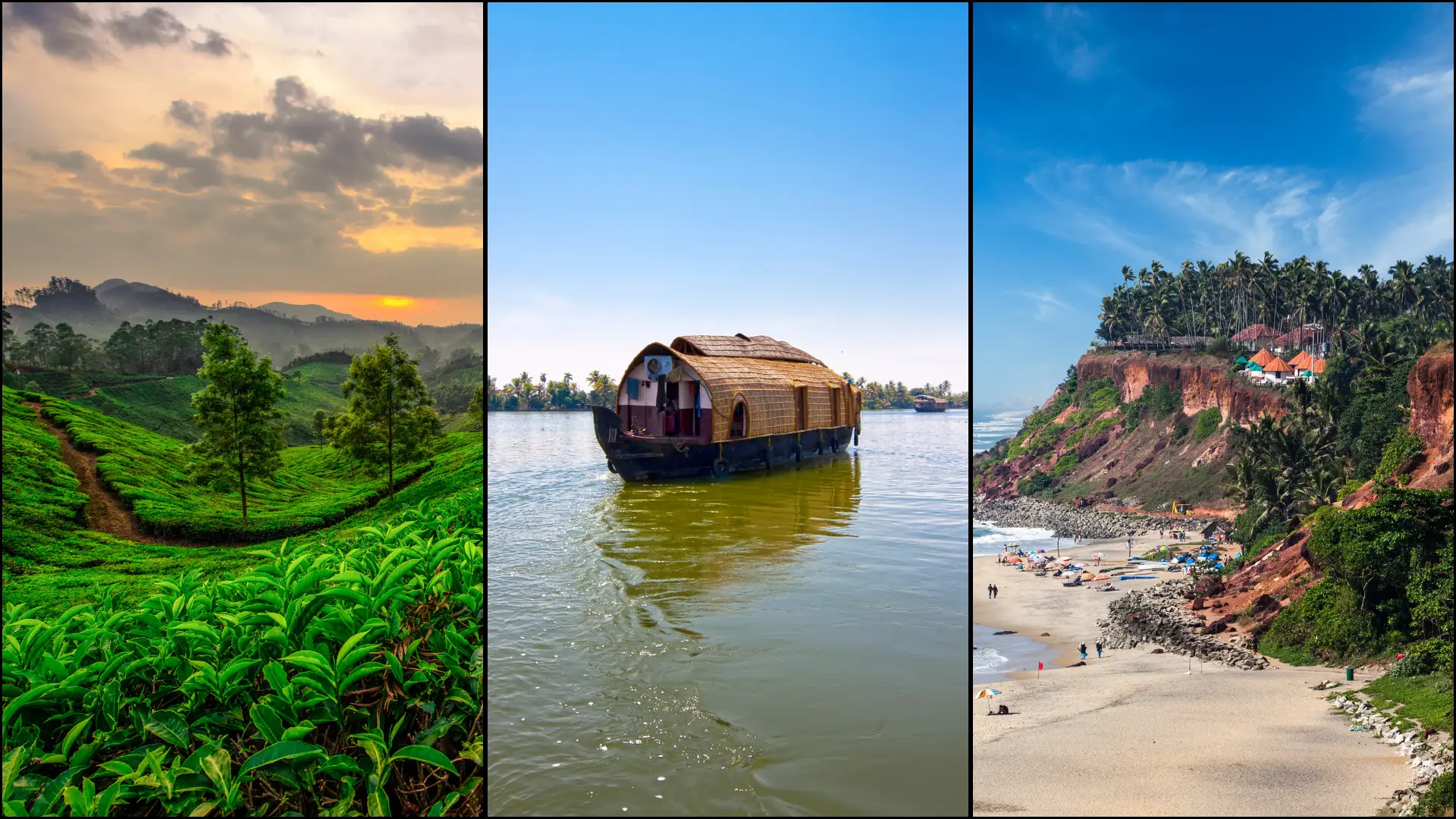
For a first trip to Kerala, visit Munnar for cool hill-station scenery and tea gardens, Alleppey for houseboat cruises through the backwaters, and Varkala for cliffside beaches and sunset views. Most travelers combine all three in a 6–8 day loop, starting in the hills, moving through the backwaters, and ending on the coast.
Kerala rarely lets you choose just one experience. Within a single state, you get misty tea-covered hills, a maze of palm-fringed backwaters, and cliffside beaches that catch the sunset just right. That range is exactly why first-time visitors get stuck at the planning stage: Munnar, Alleppey, and Varkala all promise a completely different version of “God’s Own Country,” and most people only have a week to see it.
If you’ve been searching for a straight answer on which one deserves your first visit, this guide breaks down what each destination actually offers, who it suits best, and how to sequence a trip if you’d rather not choose at all.
Munnar: For Travelers Who Want Cool Weather and Green Views
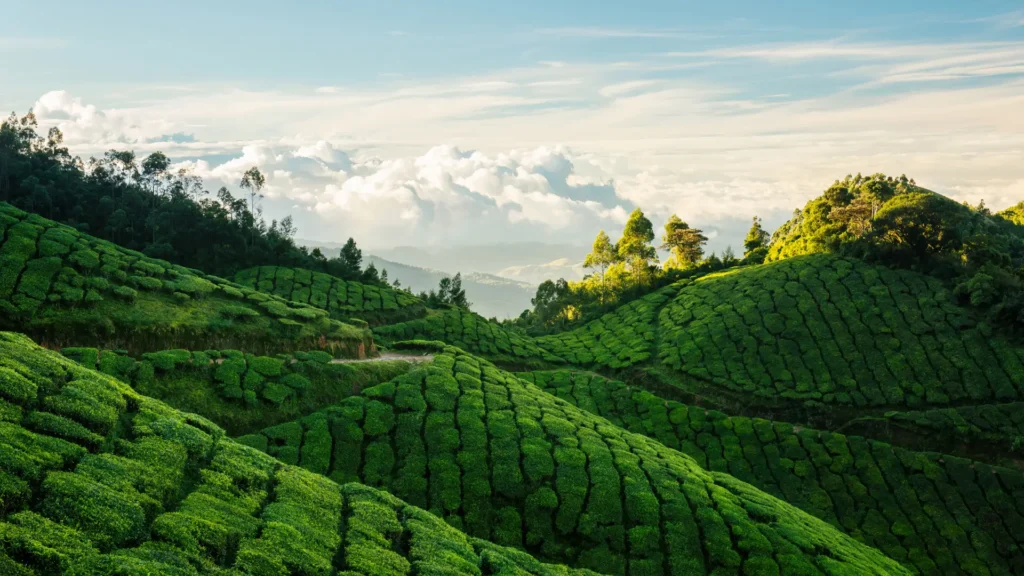
Munnar sits roughly 1,600 meters above sea level in the Western Ghats, and that altitude changes everything about the experience. Temperatures stay mild through most of the year, which makes it a rare Kerala destination where you’ll actually want a light jacket in the evenings.
The landscape is defined by tea estates that roll across the hillsides in tight, sculpted rows. Estates like the ones around Kolukkumalai are also home to some of the highest tea plantations in the world, and many offer walking trails right through the gardens along with factory visits that explain how the leaves get from bush to cup.
Beyond tea, Munnar works well for travelers who want a slower, nature-first pace:
- Eravikulam National Park, home to the endangered Nilgiri Tahr and rolling grassland trails
- Mattupetty Dam and Kundala Lake, popular for boating and photography
- Anamudi Peak, the highest point in South India, for travelers who want a proper trek
- Spice and cardamom plantations scattered around the region, since Munnar sits close to Kerala’s spice belt
Munnar suits couples, families with older kids, and anyone who wants a break from heat and humidity. It’s less suited to travelers chasing a beach-and-backwater holiday, since it’s inland and hilly with no direct access to either.
Best time to visit: September to May, with October–February offering the clearest skies for viewpoints.
Alleppey: For Travelers Who Want the Backwaters Experience
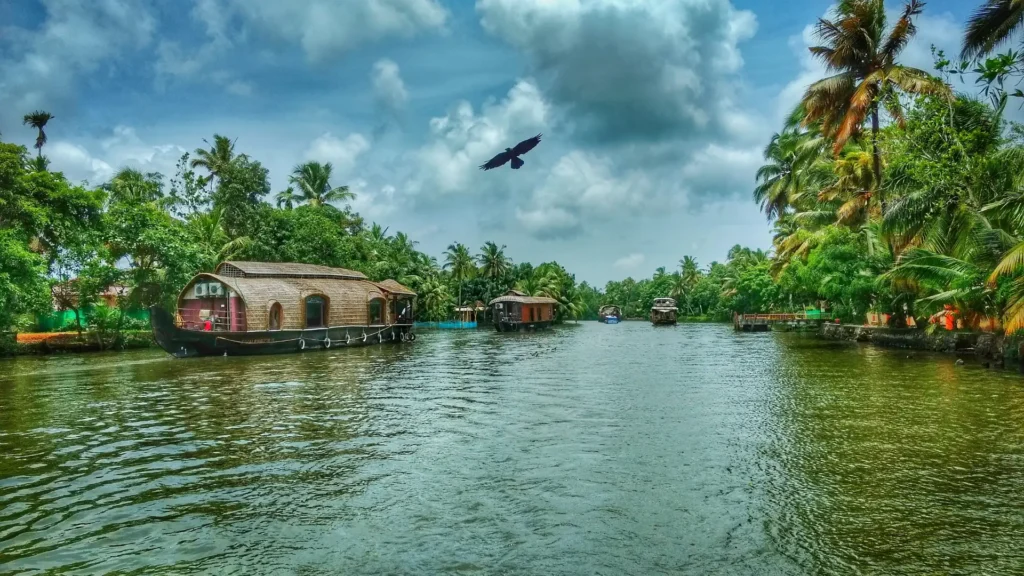
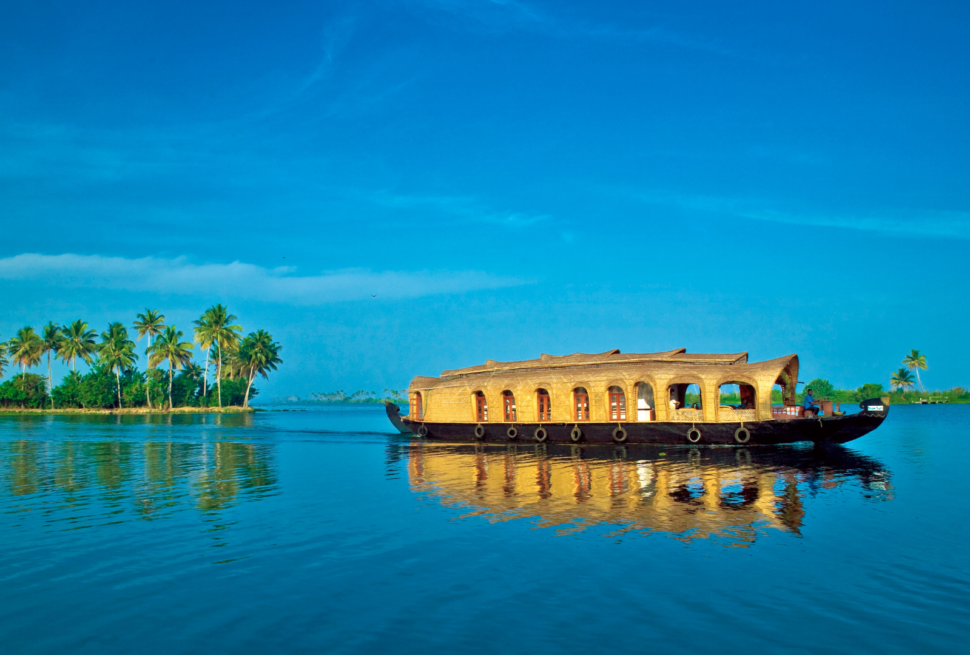
Alleppey, often called the “Venice of the East,” is built around water rather than land. A network of canals, lagoons, and the vast Vembanad Lake connects the town to dozens of small villages, and the defining experience here is a houseboat cruise — a slow drift past coconut groves, paddy fields, and small riverside homes.
Houseboats range from simple single-bedroom boats to elaborate multi-room vessels with private chefs, and most itineraries include an overnight stay so you can watch the backwaters shift from golden afternoon light to quiet, lantern-lit evenings. Beyond houseboats, Alleppey offers:
- Kuttanad, known as the rice bowl of Kerala, where farming happens below sea level
- Alleppey Beach, with a 137-year-old pier that’s popular for evening walks
- Village and canoe tours, a quieter alternative to a full houseboat stay
- Snake boat races, held seasonally and worth timing a trip around if you can
Alleppey is the destination for travelers who want stillness — slow water, quiet villages, and a pace that’s almost impossible to find on a hill station or beach town. It suits honeymooners, older travelers, and anyone who wants one genuinely restful leg of their trip.
Best time to visit: November to February for pleasant weather; August for the Nehru Trophy Snake Boat Race.
Varkala: For Travelers Who Want Beaches With a View
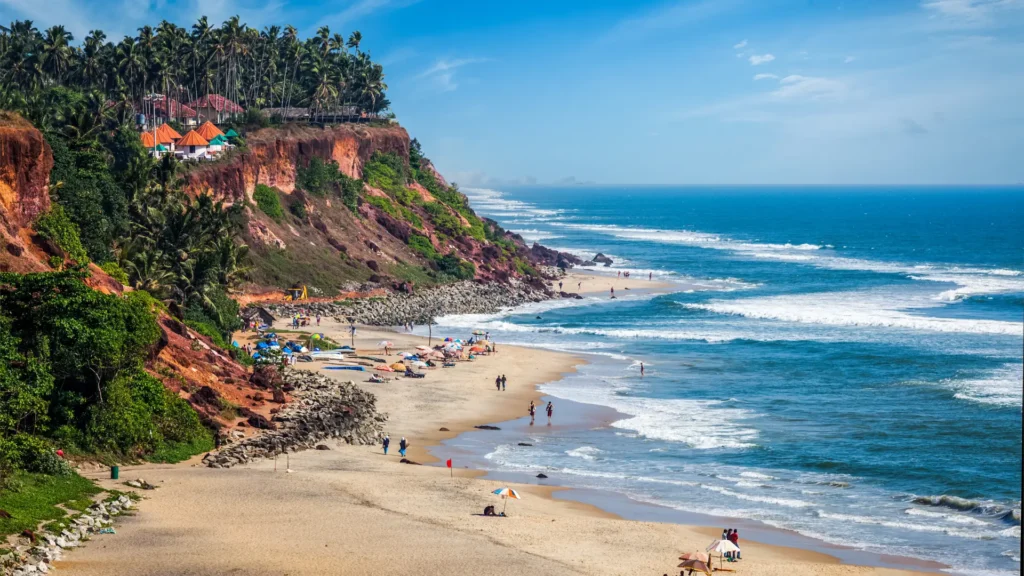
Varkala flips the usual idea of a Kerala beach. Instead of flat sand meeting the water, Varkala’s coastline is framed by dramatic red laterite cliffs that run for nearly two kilometers, with cafes, shops, and guesthouses lined up along the cliff edge overlooking the Arabian Sea.
The town has a laid-back, backpacker-friendly energy, with a strong yoga and wellness scene that’s grown alongside the beach tourism. Highlights include:
- Papanasam Beach, considered sacred and believed to have purifying properties
- Cliff-top cafes and sunset points, ideal for slow evenings with a view
- Natural mineral springs, found close to the beach and used in Ayurvedic treatments
- Janardanaswamy Temple, an important pilgrimage site near the cliffs
Varkala works well for younger travelers, solo travelers, and anyone looking to combine a beach stay with yoga, Ayurveda, or simply unwinding after a busier hill-and-backwater leg of the trip.
Best time to visit: November to March, when the sea is calmer and the cliff walks are most comfortable.
Head-to-Head: Munnar vs Alleppey vs Varkala
| Factor | Munnar | Alleppey | Varkala |
|---|---|---|---|
| Landscape | Hills, tea gardens | Backwaters, lakes | Cliffs, beach |
| Pace | Active, scenic drives | Slow, restful | Relaxed, social |
| Best for | Nature, trekking | Honeymoons, calm | Beaches, yoga |
| Climate | Cool, pleasant | Warm, humid | Warm, coastal |
| Signature experience | Tea estate walks | Houseboat stay | Cliffside sunset |
So, Which One Should You Visit First?
If you can only pick one destination for a short trip, let your priorities decide:
- Choose Munnar if you want cooler weather, greenery, and an active first few days with viewpoints and treks.
- Choose Alleppey if a slow houseboat cruise through the backwaters is the one experience you’ve been picturing.
- Choose Varkala if you want a beach base with cliffside views and a more social, laid-back atmosphere.
For most first-time visitors, though, the honest answer is: don’t choose. Kerala’s geography actually makes it easy to link all three into one loop, since Munnar, Alleppey, and Varkala sit along a natural route from the hills down to the coast.
A Simple Way to Combine All Three
A well-paced 7-day route usually looks like this:
- Day 1–2: Arrive and settle into Munnar — tea estate walks, Eravikulam National Park, and a viewpoint drive
- Day 3–4: Drive down to Alleppey for an overnight houseboat cruise through the backwaters
- Day 5–6: Continue south to Varkala for beach time, cliffside cafes, and a slower final stretch
- Day 7: Depart from nearby Thiruvananthapuram, or extend with a short Kovalam beach stop
This route works because each stop is a genuine change of pace rather than more of the same. You get the hills first, the water in the middle, and the coast last — a natural wind-down before heading home.
Getting There from Kochi
Most Kerala itineraries, including this one, are easiest to plan starting from Kochi, since it’s the state’s main international gateway. Munnar is roughly a 4-hour drive from Kochi, Alleppey is about 1.5 hours further, and Varkala sits a few hours south along the coast. If you’re mapping out a trip that departs from Kochi or elsewhere in Kerala, working with a local travel planner can help you sequence the drive times, houseboat bookings, and hotel stays so the trip flows smoothly instead of feeling rushed.
Final Thoughts
Munnar, Alleppey, and Varkala each represent a distinct side of Kerala — hills, water, and coast — and none of them is objectively “the best.” The right first stop depends on what kind of trip you want: active and scenic, slow and restful, or beach-focused and social. And if a week allows for it, there’s no real reason to pick just one. Kerala’s compact geography means you can experience all three moods of the state in a single, well-planned trip.